Eleve works with most major insurance plans. Our admissions team verifies benefits quickly and reviews your coverage with you before anything moves forward — call or text and we'll take it from there.
Admissions gets you to the door. This page shows what happens after you walk through it — who meets you, what the first few days hold, and how care begins without everything landing at once.
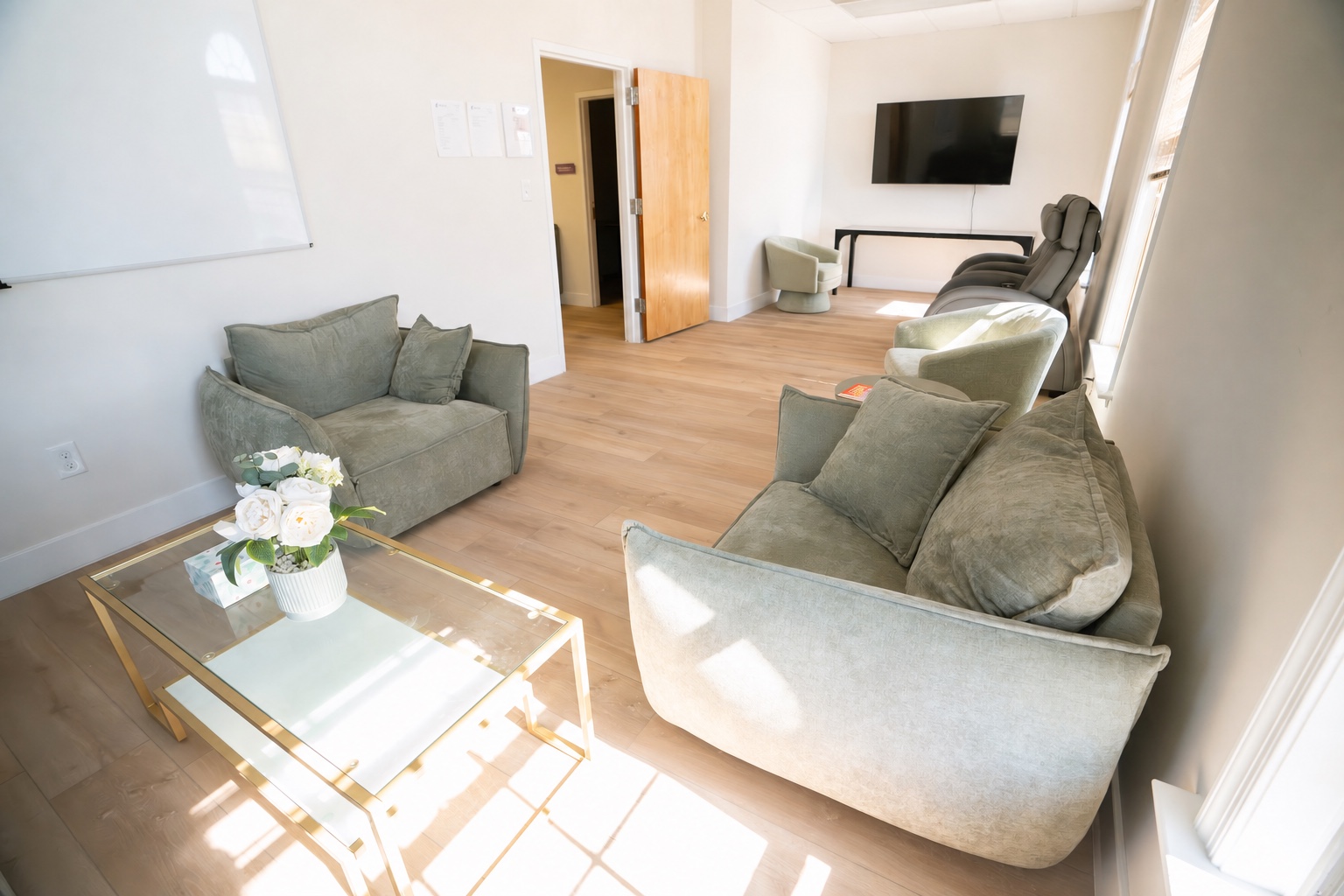
You are welcomed by a person, not pointed toward a waiting room and left to work it out. We confirm the plan for the day, answer the questions that arrived with you, and help you settle in.
Check-in stays focused
We complete the information needed to begin safely. If something is missing — an insurance card, a medication list, or a record — we help solve it instead of treating it as a reason to send you home.
A safety call can go to your support personWith your consent
If you want us to, we confirm that you arrived and explain what happens next to the person you named. You decide who receives that call and what we are permitted to share.
Building the plan
The first few days
Orientation before expectation
You learn the space, your schedule, who is on your care team, and what groups and individual sessions are for. You are not expected to understand the program before someone has shown it to you.
Clinical and medical review
Your team reviews your health history, current medications, symptoms, substance use, and immediate needs. Lab work, a physical, or a psychiatric evaluation may be included when clinically appropriate.
Your treatment plan is written with you
A biopsychosocial assessment looks at the biological, psychological, and social factors shaping what is happening. The resulting plan is collaborative, individualized, and adjusted as the team learns more.
Practical barriers enter the plan
Case management can address transportation, work, legal concerns, finances, housing stability, and connections to community resources — the real-life pressures that can make care difficult to sustain.
Finding the rhythm
The first week and after
Early check-ins make room for change
Your team checks how the schedule, medication plan, groups, and individual sessions are landing. Early adjustments are expected; they are part of individualizing care, not evidence that you are doing it wrong.
Care steps down as stability grows
The level and intensity of outpatient care can change over time. Ongoing planning connects each phase to what follows so the next step is discussed before it is needed.
02
Technology friendly
Phone.Laptop.Tablet.
For Eleve’s general programs, your devices can come with you. They help you stay connected to work, school, family, transportation, and everyday life.
During a group or individual session, we may ask you to silence or put a device away so the room can stay focused. Outside those moments, technology is treated as part of the life you are learning to manage — not something automatically taken from you.
03
Your daytime schedule
Your treatment week, made visible.
Eleve’s outpatient levels use the same integrated care team at different daytime commitments. Your assessment determines where you begin and when it makes sense to step down.
PHP
Partial Hospitalization
5 program days 5 clinical hours per day
PHP weekly commitment
25clinical hours per week
5 program days, 5 clinical hours per day
Day 015 clinical hours
Day 025 clinical hours
Day 035 clinical hours
Day 045 clinical hours
Day 055 clinical hours
IOP
Intensive Outpatient
3-, 4-, or 5-day track 3 clinical hours per program day
IOP weekly commitment
9–15clinical hours per week
Approximately 9, 12, or 15 clinical hours per week
Day 013 clinical hours
Day 023 clinical hours
Day 033 clinical hours
4- or 5-day trackDay 04
5-day trackDay 05
OP
General Outpatient
1–2 program visits per week Ongoing and step-down care
OP weekly commitment
1–2program visits per week
Frequency and services remain individualized to clinical need.
One possible cadenceOne individual session plus one group session in a week, with medication management approximately monthly when included in the plan.
Exact treatment days, arrival time, available track, and schedule changes are confirmed by Admissions. Evening and weekend living structure belongs on the Supportive Housing page.
Inside the day
We listen, then create your plan.
The exact mix is individualized, and not every service happens every day. These are the clinical and practical elements Eleve may use across a treatment week.
treatment planindividualized to you.
i
Exact treatment days, arrival time, available track, and schedule changes are confirmed by Admissions. Evening and weekend living structure belongs on the Supportive Housing page.
04
The questions underneath the questions
What people are actually wondering when they arrive.
01
What happens the moment I walk in?
Someone welcomes you at reception, confirms what the day will include, and helps with check-in. You will not be expected to remember a complicated sequence or find your way around alone.
02
Will my family know I arrived?
A safety call can be made to the support person you choose, with your consent. We confirm the boundaries of that permission with you before information is shared.
03
Do I have to tell my whole story in group on day one?
No. Orientation comes before expectation. You can listen, learn how the room works, and participate at a pace that supports both your comfort and your clinical care.
04
Can I keep my phone, laptop, and tablet?
In Eleve’s general programs, yes. Devices may need to be silenced or put away during sessions, but they are not automatically surrendered at the door.
05
What if I feel overwhelmed and need a minute?
Say so. The team can help you pause, regroup, and understand what is happening next. Needing a quieter moment is information we can respond to, not a failure to participate.
06
Who will I meet first?
Your exact first-day team depends on your needs and timing, but you will be introduced to the people involved and told why each conversation is part of the plan.
What stays steady
You should always know where you are in the process.
Care can change as your team learns more. Clarity should not.
Introductions before interviews, and a clear explanation of each person’s role.
Why each part belongs in your plan
The purpose of an assessment, group, medication conversation, or change in care is explained in plain language before it happens.
What information can be shared
Your consent and privacy boundaries revisited when family or support people are involved.
What comes next
A next step you can name — not a vague promise that someone will circle back.
Before the first day
When you are ready, we are here.
Call or text at any hour. We can answer questions, check coverage, and help you understand the next right step without requiring a decision on the spot.
PHP is five hours of treatment per day, while IOP is three hours—but both include the same full range of clinical, psychiatric, wellness, and case management services. The main difference is structure and time, not quality.
What can I expect on my first day?
Your first day includes a warm welcome, a full clinical and psychiatric assessment, and a personalized treatment plan. You’ll meet staff, explore the facility, and get oriented so you feel comfortable right away.