Resources & News
What to Expect at a Mental Health Treatment Program in New Jersey
Mental health treatment programs in New Jersey are diverse, offering a range of services to meet varying needs. Here’s what you can expect.
Published 2025-12-0410 min read

Original clinical review: Christopher Diviaio, LCSW
Christopher DiViaio is a Licensed Clinical Social Worker with over a decade of experience supporting individuals, families, and groups through complex emotional and life challenges. Grounded in strong family values, Christopher believes that meaningful connection, stability, and mutual support are foundational to emotional health and long-term growth. Outside of his clinical work, Christopher is laid-back and values balance—he enjoys hiking, gaming, and tabletop strategy games like Warhammer. He is a proud husband and father of two, and he strives to model presence, curiosity, and resilience both at home and in his professional life. Christopher believes that staying connected to family, personal interests, and real-life experiences is essential to growth, emotional regulation, and overall well-being.
This attribution is retained from the existing published article. New or revised program information requires an updated clinical review before publication.
Mental health treatment in New Jersey plays a crucial role in helping individuals cope with a wide range of mental health conditions. Whether you’re exploring options for yourself or a loved one, understanding what to expect from a treatment program can reduce fear, provide hope, and encourage healing. This guide will walk you through what these programs typically include, who they serve, and how to find the right support.
Understanding Mental Health in New Jersey
SAMHSA’s 2024 NSDUH estimated past-year mental illness among 61.5 million U.S. adults aged 18 and older (23.4%). This national measure is not a New Jersey prevalence estimate and does not determine what care an individual needs.
Source: SAMHSA · 2024 NSDUH, published July 2025 · printed page 32; civilian noninstitutionalized population
The Mental Health Association in New Jersey (MHANJ) and other organizations across the state provide mental health services designed to meet these needs. These services span from early diagnosis and talk therapy to comprehensive residential services for individuals with more complex needs, including co-occurring substance use disorders.
Who Needs Mental Health Treatment?
Anyone can be affected by mental health challenges—adults, children, families, and individuals with developmental disabilities or special needs. Sometimes symptoms arise after a traumatic life event. Other times, a disorder develops over time and begins to affect daily life, relationships, or school performance.
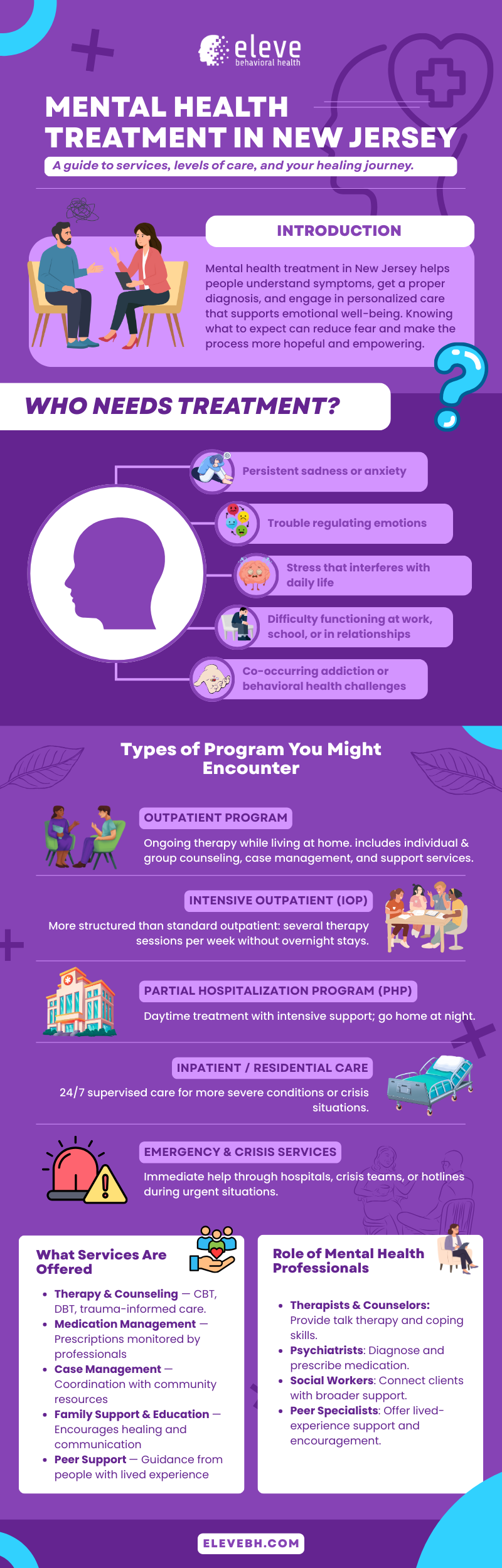
Some of the most common reasons people seek mental health treatment include:
- Persistent sadness or depression
- Anxiety and panic attacks
- Anger, fear, or difficulty regulating emotions
- Substance or alcohol use
- Family or relationship struggles
- Feelings of isolation or withdrawal
- Difficulty coping with stress or major life changes
It’s important to note that mental health conditions can occur alongside physical health issues, substance use, or developmental disabilities, and treatment should be tailored accordingly.
What Types of Programs Are Available in New Jersey?
Mental health treatment programs in New Jersey are diverse, offering a range of services to meet varying needs. Here’s what you can typically expect:
1. Outpatient Programs
Outpatient services are the most common form of mental health treatment. These programs allow individuals to receive care while maintaining their responsibilities at home or work.
Services may include:
- Individual and group therapy (often called talk therapy)
- Medication management
- Case management
- Support groups
- Substance use counseling
Outpatient care is ideal for those with mild to moderate symptoms or those transitioning out of a higher level of care.
2. Intensive Outpatient Programs (IOP)
For individuals needing more support, IOPs provide several hours of therapy multiple times a week. These structured programs help clients work through mental health symptoms while learning coping skills and receiving emotional support. IOPs often address both mental health and substance use challenges simultaneously.
3. Partial Hospitalization Programs (PHP)
PHPs are a step above IOPs, offering comprehensive treatment during the day while allowing patients to return home at night. These programs are suitable for people who need more intensive support than outpatient care but don’t require 24-hour supervision.
4. Inpatient and Residential Services
Inpatient treatment is typically provided in a hospital setting for individuals in crisis or facing severe mental health symptoms. Residential services, on the other hand, offer long-term support in a live-in environment. These programs focus on healing, recovery, and life skills development.
Residential programs in New Jersey may also specialize in:
- Co-occurring substance use and mental health disorders
- Adolescents or children with emotional or behavioral health challenges
- People with developmental disabilities or special needs
5. Emergency and Crisis Services
In situations where immediate help is required, emergency services are available through local hospitals or crisis hotlines. Many counties in NJ operate mobile response units or crisis intervention teams trained to assist individuals and families in urgent need.
What Services Are Offered?
A mental health treatment program in New Jersey typically includes a combination of the following services:
- Therapy (Talk Therapy): Evidence-based approaches like Cognitive Behavioral Therapy (CBT), Dialectical Behavior Therapy (DBT), and trauma-informed therapy help individuals explore their thoughts, emotions, and behaviors.
- Medication Management: A psychiatrist or other mental health professional may prescribe medications to manage symptoms such as anxiety, depression, or mood swings.
- Case Management: A case manager helps coordinate care, including referrals to community resources, housing, or vocational support.
- Family Support: Many programs involve family members to build understanding, improve communication, and provide emotional support during recovery.
- Peer Support and Advocacy: Peer specialists, who have lived experience, provide insights, encouragement, and advocacy.
- Substance Use and Addiction Services: For individuals struggling with alcohol or drug use, integrated addiction services address both substance use and mental illness.
What Is the Role of Mental Health Professionals?
Mental health professionals in New Jersey may include psychologists, psychiatrists, social workers, counselors, and psychiatric nurses. Each plays a unique role:
- Psychologists and therapists conduct assessments and provide talk therapy.
- Psychiatrists diagnose mental health conditions and prescribe medications.
- Social workers often focus on case management and resource coordination.
- Peer support specialists provide firsthand experience and a listening ear.
- Psychiatric nurses assist with medication and health services in clinical settings.
Working with a team of providers ensures that treatment addresses the full range of a person’s emotional, physical, and behavioral health needs.
What Should You Expect Emotionally?
Entering treatment can feel overwhelming. Many people experience fear, sadness, or uncertainty. It’s normal to feel nervous about opening up to a therapist or sharing personal feelings. However, mental health programs are designed to create a safe space where people feel comfortable, respected, and supported.
Programs often begin with an assessment to understand your symptoms, diagnosis, history, and goals. From there, a personalized treatment plan is developed. Throughout the process, your providers will work with you to explore emotions, develop coping strategies, and gain insights into your life, relationships, and experiences.
Supporting a Loved One
If you’re a family member or friend supporting someone in treatment, your role is vital. Encouraging your loved one, attending family sessions, and understanding the recovery journey can help them feel less alone. The New Jersey mental health community offers support groups and advocacy resources to help families cope and learn how to best provide emotional support.
Choosing a Program in New Jersey
When looking for mental health treatment in New Jersey, consider the following:
- Accreditation and licensing: Ensure the facility is licensed and staffed with qualified professionals.
- Specialties: Some programs specialize in specific disorders (e.g., depression, anxiety), populations (e.g., adolescents, adults), or services (e.g., addiction services, developmental disabilities).
- Location: Depending on your needs, you may prefer a local program in areas like Short Hills or one offering residential services statewide.
- Cost and insurance: Check if the program accepts your insurance or offers sliding scale fees.
You can begin your search by contacting the Mental Health Association in New Jersey, speaking with a primary care doctor, or exploring state resources like NJ Mental Health Cares (1-866-202-HELP).
Understanding Current Eleve Care and Planned Mental-Health Services
Selecting mental-health care in New Jersey is an important decision. Eleve's primary mental-health program is in development, pending final regulatory approval, and is not yet accepting clients. Mental-health care is currently available within its substance-use and co-occurring program, subject to clinical fit and availability. The following describes considerations for current substance-use and co-occurring care, not an open standalone mental-health program.
1. Personalized, evidence‑based care.
Eleve's current outpatient program addresses substance use and co-occurring concerns through individualized care. The eleve Center for Gambling Recovery focuses on problem gambling. The dedicated primary mental-health program remains in development.
Additionally, we offer therapies like CBT (Cognitive Behavioral Therapy), DBT (Dialectical Behavior Therapy), and motivational interviewing for a deeper, clinical focus.
2. Integrated approach to mental health and substance use.
Recognizing that mental illness, substance use, addiction, and behavioral health challenges often intertwine, Eleve offers dual diagnosis capability. Our program addresses co‑occurring disorders so that someone dealing with a mental health condition and addiction can receive coordinated care rather than fragmented services.
3. Multiple levels of care available in New Jersey.
Located in Voorhees Township, NJ, Eleve offers outpatient levels within current substance-use and co-occurring care. Admissions can confirm current PHP, IOP, and outpatient options; assessment, progress, and availability determine placement and transitions.
4. Family involvement and emotional support built in.
The healing process doesn’t just involve the individual with the diagnosis; family members, loved ones and support networks play a vital role. At Eleve, we include family therapy, support and case management as part of our model, helping families understand mental health conditions and feel more comfortable supporting a loved one in treatment.
5. Strong values and commitment to quality.
Our core values include integrity, compassion, empathy and clinical excellence. We have a commitment to creating a meaningful connection, treating people with dignity, and supporting healing not just in symptoms but in life itself.
6. Confirm Current Eligibility and Availability.
Eleve is located in New Jersey. Admissions can explain current substance-use and co-occurring care and referral options; the planned primary mental-health program is not yet accepting clients.
The Importance of Hope
Recovery from a mental health condition is not linear. It often involves setbacks, progress, learning, and healing. But with the right support, people living with mental health conditions can improve their ability to function in daily life, build meaningful relationships, and find hope again.
Many people describe treatment as a turning point—a chance to gain control, understand their emotions, and advocate for their own well-being. Whether you’re taking the first step or helping someone else find answers, seeking treatment is a sign of strength.
Get Connected to Mental Health Care in New Jersey Today
Mental health treatment in New Jersey offers a wide range of options for individuals and families facing emotional, behavioral, or psychological challenges. From talk therapy and medications to residential services and addiction support, programs are designed to help people understand their symptoms, manage their emotions, and rebuild their lives.
With compassionate care, professional guidance, and access to resources, recovery is possible. If you or someone you care about is struggling, don’t wait. Reach out to Eleve Behavioral Health for more information on how we can help.
Frequently Asked Questions (FAQ)
1. How long does a mental health treatment program typically last?
The length of a mental health treatment program varies based on the individual’s diagnosis, progress, and level of care required. Outpatient programs may last a few weeks to several months, while residential services can range from 30 days to a year or more. Treatment plans are regularly reviewed and adjusted based on the person’s needs.
2. Can I continue working or attending school while in treatment?
Yes, many outpatient and intensive outpatient programs (IOPs) are designed to accommodate work or school schedules. Evening or flexible day programs allow individuals to receive care without putting their daily life on hold. However, more intensive levels like partial hospitalization may require a temporary pause from external commitments.
3. What’s the difference between a therapist, psychologist, and psychiatrist?
A therapist provides talk therapy and may be a licensed counselor or clinical social worker. On the other hand, a psychologist holds a doctoral degree and can diagnose mental health disorders and provide therapy.
Lastly, a psychiatrist is a medical doctor who can diagnose conditions and prescribe medications. Some treatment programs include all three as part of a care team.
4. Is mental health treatment covered by insurance in New Jersey?
Yes. Under federal and New Jersey law, most insurance plans are required to cover mental health and behavioral health services. Coverage may include therapy, medications, and inpatient or outpatient care. Always check with your provider or the treatment facility to understand specific benefits and out-of-pocket costs.
5. How do I talk to a loved one about getting help?
Approach the conversation with empathy and without judgment. Express concern based on specific behaviors or emotions you’ve observed. Encourage them to speak with a mental health professional and offer to help with next steps—whether it’s making a call, attending a consultation, or researching programs. Involving a family doctor or support group can also ease the process.
6. What should I bring to a treatment program?
For outpatient programs, bring identification, insurance information, and any requested paperwork. For residential services, you’ll typically need essentials like clothing, toiletries, prescribed medications, and possibly a journal. Facilities usually provide a checklist during admission to help you prepare.
References:
- The National Alliance on Mental Illness: Mental Health by the Numbers
- The National Alliance on Mental Illness: Mental Health in New Jersey
Related information

compassionate care.
clinical excellence.