Resources & News
How Much Does Drug & Alcohol Rehab Cost in New Jersey?
The cost of rehab in New Jersey varies depending on the type of treatment facility and services provided, with inpatient programs costing more.
Published 2025-12-218 min read

Original clinical review: Christopher Diviaio, LCSW
Christopher DiViaio is a Licensed Clinical Social Worker with over a decade of experience supporting individuals, families, and groups through complex emotional and life challenges. Grounded in strong family values, Christopher believes that meaningful connection, stability, and mutual support are foundational to emotional health and long-term growth. Outside of his clinical work, Christopher is laid-back and values balance—he enjoys hiking, gaming, and tabletop strategy games like Warhammer. He is a proud husband and father of two, and he strives to model presence, curiosity, and resilience both at home and in his professional life. Christopher believes that staying connected to family, personal interests, and real-life experiences is essential to growth, emotional regulation, and overall well-being.
This attribution is retained from the existing published article. New or revised program information requires an updated clinical review before publication.
If you or someone you love is considering drug and alcohol rehab in New Jersey, one of the first questions that may come to mind is: How much does rehab cost? Understanding the financial side of addiction treatment is essential for making informed decisions about care. With a wide range of options—from outpatient services to inpatient rehabilitation—treatment costs can vary significantly depending on the type, duration, and intensity of the program, as well as your insurance coverage and eligibility for financial assistance.
In this comprehensive guide, we’ll break down the average costs of drug and alcohol rehab in New Jersey, what influences those costs, and how to find the best treatment programs for your needs.
The State of Addiction in New Jersey
The opioid epidemic and broader substance use crisis have struck New Jersey. According to the New Jersey Department of Human Services, more than 82,000 residents were admitted to substance abuse treatment programs in 2023.[1] Alcohol, heroin, and other opioids were among the most commonly reported substances.
Substance use disorder is often accompanied by mental health disorders such as depression, anxiety, PTSD, or bipolar disorder, necessitating co-occurring disorder treatment. Because of this, rehab centers in New Jersey typically offer both addiction treatment and mental health services.
Average Cost of Drug & Alcohol Rehab in New Jersey
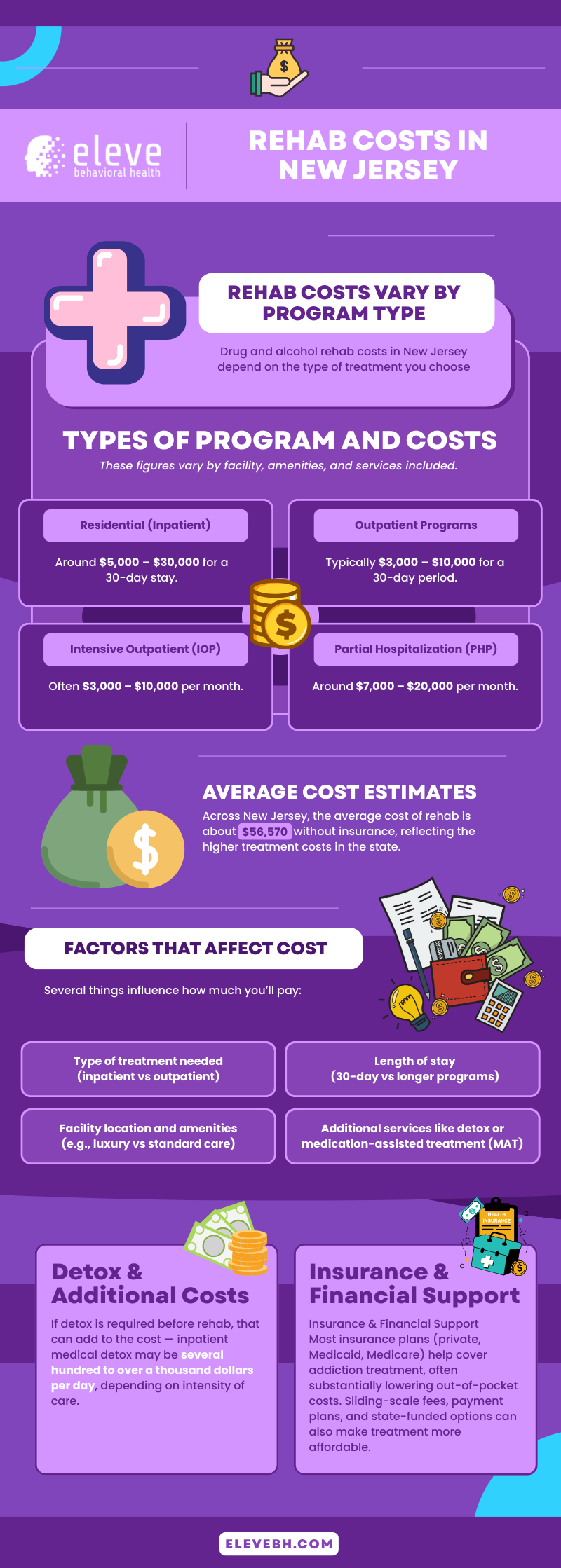
The cost of rehab in New Jersey varies significantly depending on the type of treatment facility and services provided. Here’s a general overview:
Detox Services
Medical detox is often the first step in recovery, especially for substances like alcohol, benzodiazepines, and opioids. These programs can either be inpatient or outpatient. The cost ranges from $3000 to $1,500 per day.
Inpatient Rehab
Also called residential treatment, this includes 24/7 care in a treatment center. Inpatient services often include group therapy, individual counseling, medication-assisted treatment, and evidence-based therapies like CBT and DBT. The cost ranges from $6,000 to $30,000 for a 30-day program
Outpatient Treatment
Outpatient treatment is suitable for individuals with a stable home environment and a lower risk of relapse. This may include outpatient programs, intensive outpatient treatment (IOP), or partial hospitalization (PHP). The cost ranges from $1,000 to $10,000 per month, depending on frequency and intensity of care.
Medication-Assisted Treatment (MAT)
For those with opioid or alcohol use disorders, medications such as Suboxone or Vivitrol are used in combination with therapy. The cost of medication-assisted treatment ranges from $500 to $2,000 per month (without insurance).
Aftercare and Recovery Support Services
Aftercare programs include support groups, alumni programs, and community involvement initiatives. May also include art therapy, medication management, and relapse prevention planning.
The cost of aftercare varies; some services are free, others charge modest fees.
Factors That Influence Rehab Costs
Treatment Length
Longer stays (60 to 90 days) in residential treatment programs cost more but are often more effective for severe addictions.
Type of Facility
Luxury rehab facilities with private rooms, gourmet meals, and holistic therapies cost significantly more than state-funded or community-based Jersey rehab centers.
Location
New Jersey treatment centers located in urban areas or near the shore may charge higher fees compared to inland rural facilities.
Type of Services
The inclusion of dual diagnosis treatment, intensive outpatient programs, or inpatient rehabilitation can affect overall treatment costs.
Insurance Coverage for Rehab in New Jersey
Private Insurance
Most private insurance plans are required by the Mental Health Parity and Addiction Equity Act to cover substance abuse treatment similarly to medical care. Common plans include:
- Horizon Blue Cross Blue Shield of NJ
- Aetna
- Cigna
- UnitedHealthcare
Coverage varies by plan and provider network. Patients typically have co-pays, deductibles, or co-insurance responsibilities.
State-Funded Health Insurance
NJ FamilyCare, the state’s Medicaid program, covers many addiction services, including inpatient rehab, outpatient addiction treatment, and medication-assisted treatment. However, not all jersey treatment centers accept Medicaid, so it’s essential to verify with the provider.
Financial Aid and Payment Plans
For individuals without insurance or with high out-of-pocket costs, there are several ways to manage rehab expenses:
Sliding Scale Fees
Some New Jersey rehab centers adjust costs based on your income.
Payment Plans
Many treatment centers offer monthly payment arrangements with no interest.
Grants and Scholarships
Some facilities or non-profits offer scholarships, especially for individuals with demonstrated financial need.
Employer Assistance
Some employers offer Employee Assistance Programs (EAPs) that may cover part of the treatment services.
Why Investing in Treatment Is Worth It
While the rehab costs can seem high, not treating substance abuse and mental health issues is often more expensive in the long run. Costs related to healthcare, job loss, legal issues, and broken relationships far outweigh the price of treatment.
According to the Substance Abuse and Mental Health Services Administration (SAMHSA), every dollar spent on addiction treatment saves approximately $4 in healthcare costs and $7 in criminal justice costs.[2]
Finding the Right Rehab Center in New Jersey
There are many treatment centers to choose from when you are considering addiction care in New Jersey. That said, not every program is created equally. You want to make sure you are choosing the best program for your needs.
When evaluating New Jersey rehabs, consider the following:
- Accreditation: Look for CARF or Joint Commission-accredited facilities.
- Personalization: Does the program customize treatment based on your specific diagnosis?
- Aftercare: Does the program include recovery support services post-discharge?
- Specialization: Some facilities focus on specific populations (e.g., women, veterans, teens).
- Treatment Options: Does it offer a continuum of care, including inpatient treatment, outpatient rehab, and support groups?
Commonly Asked Questions About Rehab Costs in New Jersey
Is rehab covered by insurance in New Jersey?
Yes, most health insurance providers offer at least partial coverage. Always verify with both your insurance and the treatment facility.
Are there free or low-cost treatment options in New Jersey?
Yes. State-funded programs and non-profits are offering free or reduced-cost care based on financial eligibility.
How long does rehab last?
Treatment can range from 7-day detox to 90-day residential treatment programs, followed by ongoing outpatient services and support groups.
What’s the difference between inpatient and outpatient rehab?
Inpatient rehab involves living at the treatment center full-time. Outpatient programs allow individuals to live at home and attend scheduled sessions.
Get Connected to a Reputable Drug and Alcohol Rehab Center in New Jersey
Understanding the cost of drug and alcohol rehab in New Jersey is a critical first step toward lasting recovery. With a range of treatment options—from outpatient programs to inpatient rehabilitation—there is help available for every budget and every level of need. Whether you’re dealing with alcohol addiction, drug abuse, or a co-occurring mental health disorder, there are comprehensive treatment programs across the state designed to support your recovery journey.
The investment in rehab is not just financial—it’s an investment in a healthier, more fulfilling future. If you are suffering from a substance use disorder, it’s time to seek help. At Eleve Behavioral Health, we can provide you with the tools and support you need to achieve long-term sobriety. Contact us today for more information on how to get started.
Frequently Asked Questions (FAQ)
1. What should I bring to a residential rehab program in New Jersey?
Most residential treatment centers provide a list of approved items, but typically you’ll need:
- Comfortable clothing for 30+ days
- Personal hygiene products (alcohol-free)
- Prescription medications (in original bottles)
- A journal or notebook
- Insurance and ID documents
Prohibited items often include electronics, alcohol-based products, and anything deemed a distraction to recovery. Always check with the specific rehab facility beforehand.
2. How do I verify a New Jersey rehab center’s credentials or reputation?
You can verify a treatment center’s credentials through:
- The New Jersey Department of Health for state licensing
- SAMHSA’s Treatment Locator for verified facilities
- Independent reviews on Google, Yelp, or recovery-focused directories
- Accreditation agencies like CARF (Commission on Accreditation of Rehabilitation Facilities) or The Joint Commission
Be sure to ask if the staff includes licensed professionals in addiction counseling, psychiatry, and nursing.
3. Can I visit or communicate with loved ones during rehab?
Communication policies vary by facility and program phase. Many centers implement a “blackout period” at the start, during which outside contact is limited. Afterward, most programs allow:
- Scheduled phone calls or video chats
- Family therapy sessions
- Visitation days (usually on weekends)
Family involvement is encouraged in many evidence-based treatment models as it supports long-term recovery.
4. Is telehealth available for outpatient addiction treatment in New Jersey?
Yes. Since the COVID-19 pandemic, many New Jersey treatment centers have expanded their telehealth services for:
- Virtual therapy sessions
- Medication management
- Case management and recovery coaching
This is especially useful for individuals in rural areas or those with transportation barriers.
5. What happens if someone relapses after completing a rehab program?
Relapse is not a failure—it can be a part of the recovery process. If relapse occurs:
- Reassessment by a clinical team is recommended
- Adjustments may be made to the treatment plan (e.g., transition from outpatient back to inpatient care)
- Support from recovery support services, support groups, and peer coaches can help prevent future relapse
Many rehab centers in New Jersey offer alumni support and relapse prevention plans to help navigate these challenges.
6. Are there addiction treatment programs in New Jersey tailored to specific populations?
Yes. Many New Jersey rehab centers offer specialized programs for:
- Veterans
- LGBTQ+ individuals
- Adolescents and young adults
- Pregnant women and mothers
- People with co-occurring disorders
These programs are designed to address the unique cultural, psychological, and medical needs of each group for more effective care.
References:
- The State of New Jersey: Substance Use Overview 2023 Statewide
- The National Institutes of Health: Societal Benefits of Improved Health

compassionate care.
clinical excellence.